

Jaipur Metro Pink Line Route Explained
Deep dive into the Pink Line corridor with construction history, engineering details, station architecture, and how each stretch connects different parts of Jaipur.
Line Length
12 km
Construction Type
Elevated + Underground
Daily Ridership
25,000–35,000
Stations
11
End-to-End Time
~25 minutes
Opened
Phase 1A operational
The Pink Line is not just Jaipur's metro route. It is the city's first mass rapid transit system, a 12-kilometre corridor that changed how lakhs of residents commute daily. Understanding the line beyond just station names reveals why certain stations are busier, why the route follows the path it does, and how the engineering adapts to Jaipur's unique geography.
Why the Pink Line Was Built Where It Was
The Pink Line corridor was chosen because it connects two critical points: the western residential suburbs (Mansarovar, which houses over 5 lakh residents) with the eastern commercial and heritage core (Chandpole, the gateway to the walled city). The route follows the natural east-west commuter flow that previously relied entirely on buses and auto-rickshaws along a perpetually congested road corridor.
Before the metro, the Mansarovar to Chandpole road journey during peak hours could take 45 to 70 minutes. The metro cuts this to a fixed 25 minutes regardless of traffic conditions above ground.
Elevated vs Underground Sections
The Pink Line uses two construction types:
- Elevated section (western half): From Mansarovar to approximately Sindhi Camp, the line runs on elevated viaducts above the existing road. This was the more cost-effective construction method and the surrounding areas had sufficient road width to accommodate the pillars without displacing buildings
- Underground section (eastern half): From Sindhi Camp into the walled city (Chandpole, Chhoti Chaupar, Badi Chaupar), the line goes underground. This was necessary because the narrow lanes and dense heritage buildings of the old city could not accommodate elevated structures. Tunnelling through the walled city's ancient foundations required specialised engineering to avoid disturbing the heritage structures above
Station Architecture and Design
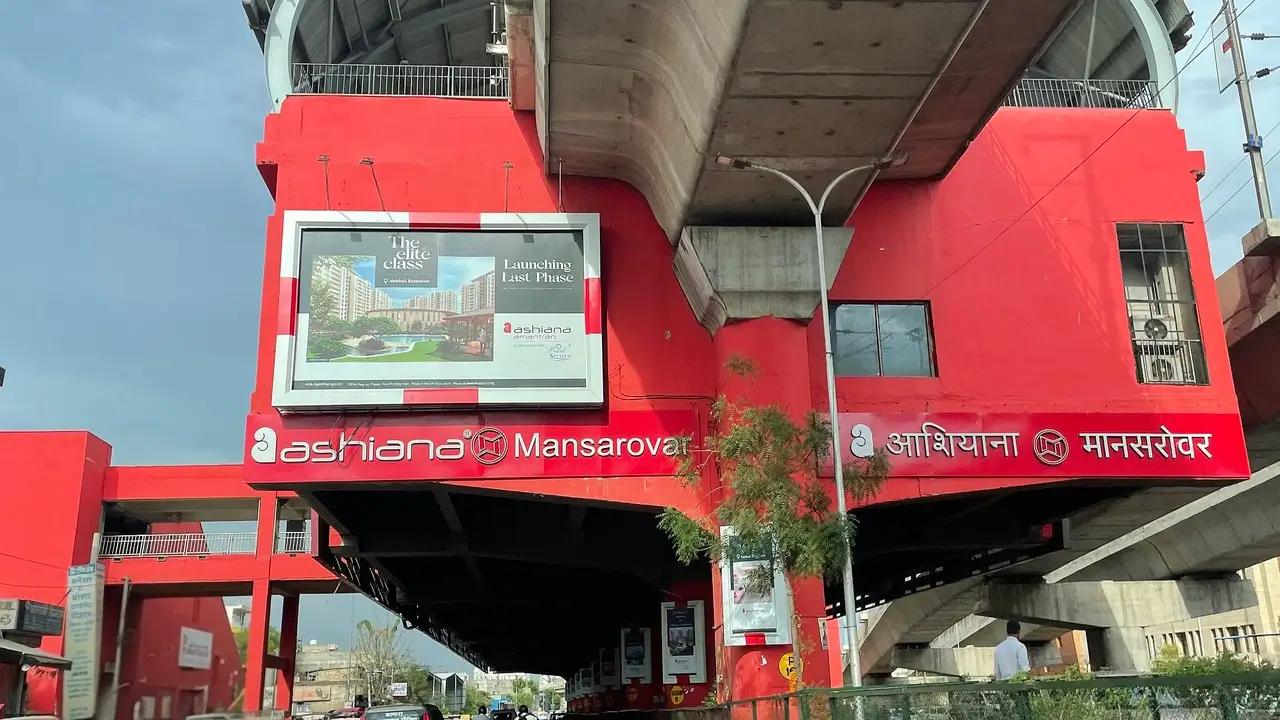
Jaipur Metro stations were designed to reflect the city's architectural identity. The elevated stations feature pink sandstone-inspired cladding, echoing the Pink City's signature colour. Underground stations use a combination of modern materials with traditional Rajasthani geometric patterns in the wall tiling and ceiling design.
Each station was built with standard amenities: ticket counters, fare gates, elevators, escalators, accessible toilets, drinking water points, and CCTV coverage. The variation between stations is primarily in scale: terminal stations (Mansarovar, Chandpole) and major interchange stations (Civil Lines) are significantly larger than mid-line stations.
The Western Stretch: Mansarovar to Shyam Nagar
This elevated section serves Jaipur's western residential belt. Mansarovar colony alone has a population exceeding 5 lakh, making the western terminus the primary boarding point for daily commuters. The stations at New Atish Market and Vivek Vihar serve commercial and residential zones respectively. Shyam Nagar marks the transition from suburban residential to the denser mid-city area.
The elevated viaduct in this section runs above the median of the main road, with stations accessed via staircases and elevators from street level. The elevated position gives passengers views across the city during the ride.
The Central Stretch: Ram Nagar to Sindhi Camp
This section passes through the commercial heart of the city. Civil Lines station, the busiest on the network, sits at the intersection of government offices, the main bus terminal, educational institutions, and commercial markets. The station was engineered with larger platforms and multiple entry and exit points to handle the volume.
Sindhi Camp station provides the key connection between metro and intercity bus services. The design accommodates the flow of passengers transferring between buses arriving from Delhi, Agra, and other cities and the metro network for onward travel.
The Eastern Stretch: Chandpole to Badi Chaupar (Underground)
The underground section is the engineering achievement of the Pink Line. Tunnelling beneath the walled city required careful navigation around foundations that are up to 300 years old. The tunnel-boring machines used were smaller than standard metro TBMs to accommodate the narrow alignment.
Chandpole station sits beneath one of the busiest intersections in the old city. The underground concourse connects to street level via escalators and elevators that emerge near the Chandpole Gate. Chhoti Chaupar and Badi Chaupar stations are similarly underground, providing direct access to the dense commercial and tourist areas of the walled city without disrupting the historic streetscape above.
Daily Ridership and Impact
The Pink Line carries approximately 25,000 to 35,000 passengers daily on regular weekdays, with numbers climbing to 40,000 to 50,000 during festivals and peak tourist season. While these numbers are modest compared to Delhi or Mumbai metro systems, the impact on Jaipur's specific corridor is significant. Bus ridership on parallel routes has decreased, and auto-rickshaw fare gouging on the Mansarovar to old city route has reduced because passengers now have a fixed-fare alternative.
Future of the Pink Line
There are proposals to extend the Pink Line further east beyond Badi Chaupar and to add a southern spur connecting to more of the Sitapura Industrial Area. These extensions would add 3 to 5 more stations to the existing line. However, the primary expansion focus for Jaipur Metro is the Phase 2 Orange Line, which will create a north-south corridor intersecting the Pink Line at a planned interchange station.
Key Highlights
- 112 km corridor from Mansarovar (west) to Chandpole (east)
- 2Western half is elevated on viaducts, eastern half is underground through the walled city
- 3Daily ridership of 25,000 to 35,000 on regular weekdays
- 4Underground section required specialised tunnelling to protect 300-year-old foundations
- 5Pink sandstone cladding on stations reflects the Pink City's architectural identity
Practical Tips
- →Sit on the right side of the train when heading east (towards Chandpole) for better city views from elevated stations
- →The underground stations are naturally cooler, a welcome relief during Jaipur's hot summers
- →Notice the Rajasthani geometric patterns in the underground station tiles, they are unique to each station
- →The transition from elevated to underground happens smoothly, you will feel the train descend near Sindhi Camp
- →Morning light on the elevated section between Mansarovar and Shyam Nagar offers good photography conditions
Frequently Asked Questions
Plan your Jaipur Metro journey
Use our free tools to calculate fares, check timings, find stations, and discover what to see near each stop.